

Day Trip to Celestun Biosphere Reserve (Mexico)
If you’re looking for an easy nature escape in Mexico, a day trip to the Celestun Biosphere Reserve is one of the best things to do on the Yucatan Peninsula!
This protected coastal wetland is famous for its pink flamingos throughout the year, but there’s far more here than one photo opportunity. Mangrove forests, salt flats, quiet beaches, bird-watching, and a laid-back fishing village make Celestun feel refreshingly untouched compared to other Yucatan attractions.
I visited Celestun on a day trip from Merida, and this guide covers how to get there, the best time to visit, what to expect on a flamingo boat tour, and whether it’s worth going independently or on a tour! Check out the contents section to skip to your preferred section.
Why Visit the Celestun Biosphere Reserve?
The Celestun Biosphere Reserve covers over 146,000 hectares and is home to hundreds of bird species, including the famous flamingos. The area also features mangrove forests, salt flats, and quiet beaches.
I view Celestun as the little brother of the Sian Ka’an Nature Reserve near Tulum. It’s smaller, cheaper, and far less crowded allowing for more authentic sightings!
Key reasons to visit Celestun:
- Observing flamingos in their natural habitat.
- Exploring the mangroves by boat.
- Relaxing on quiet beaches.
- Trying fresh seafood in the local village.
- Spotting other wildlife such as crocodiles, cormorants, herons, egrets and pelicans.

How to Get to Celestun Biosphere Reserve
Celestún is located about 90km west of Mérida (Yucatán’s capital), making it ideal for a day trip . Here’s exactly how to get to Celestun from Merida (you have a few options):
- By Car or Scooter: Renting a car or scooter (if you’re confident) gives you the most flexibility so you can travel at your own pace. The drive takes 1.5-2 hours via Highway 281. This is my top recommendation unless you’re booking an all-inclusive tour.
- By Bus: ADO and other local buses run daily from Mérida to Celestún, taking around 2.5 hours. You can pick up the public bus from the junction of Calle 67 and Calle 50 in Merida. Whilst it is cheaper, it can eat into your day.
- By Tour: Various tour operators in Mérida offer day trips, which usually include transportation and a boat tour. This is the easiest option if you’re short on time or travelling solo.
Best Time to Visit Celestun Biosphere
The best time to visit Celestun is between December and March when flamingo numbers are at their peak. The weather is cooler, making it more pleasant to explore.
If you prefer a quieter experience, visiting in April to May can still be rewarding with fewer crowds and nice weather. However, there’s slightly less chance of spotting flamingos!
Beyond this time (May-November), you’re unlikely to see many flamingos since they migrate to Isla Holbox.

How to Visit the Celestun Biosphere Reserve
There are several ways to explore the Celestún Biosphere Reserve, depending on your preferences and budget.
- Guided Tours: Booking a guided tour from Mérida or Celestun is the most popular option as everything is organised for you. Most tours include your transport for the day; a guided boat trip; and insights from knowledgeable local guides. It’s a hassle-free option but can be expensive and less flexible compared to other options. Prices usually start around 1500 MXN. I recommend booking a tour through GetYourGuide.
- Group Excursions: Some hotels and eco-lodges in Celestun organise shared group excursions. This can be a good way to meet fellow travellers and enjoy a planned-out itinerary.
- Visiting Independently: If you prefer flexibility, you can hire a boat directly from the local cooperative at the Celestun dock. Prices are usually set per boat, so sharing with other travellers can reduce costs. Try to arrive early as wildlife is more active in the morning and you will probably have the reserve all to yourself!
Looking back, I enjoyed my guided tour to Celestun, as I met great people and had transport arranged for me. However, I would seriously consider renting a scooter (less than 500MXN/day) and staying overnight nex time, to explore this less-visited part of Yucatan.
Things to Do in Celestun Biosphere
1. Flamingo Boat Tours
A boat tour is the best way to see the flamingos and explore the mangroves. Tours typically last around 2-3 hours and provide great views of the landscape and wildlife.
On our tour, we departed from Celestun Beach early in the morning and headed south, hugging the coastline in search of flamingos. It wasn’t long until we saw a group of them. We cut the engines and stopped to take photos, admiring their pink beauty.
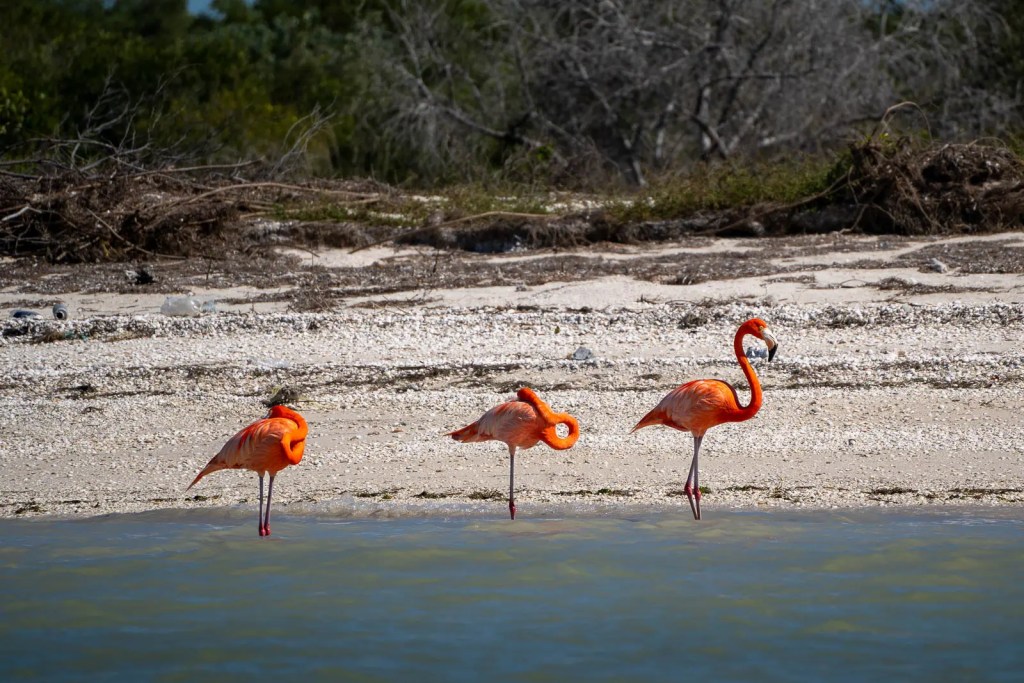
Not long later we spotted another group, and then another! I’m glad I had my zoom lens as we kept our distance from the flamingos.

On the way back to shore, we swam in the sea to cool off. Despite being far out, it was very shallow! The ground is very silty as it’s largely untouched. We stopped a few times to see if we could spot dolphins, but sadly no luck on this occasion.
2. Exploring the Mangroves
The mangroves provide habitat for many bird species and other wildlife. Most boat tours also include stops here for closer exploration.
Gladly, my tour included a trip to the mangroves, where we cut inland through a narrow water passage to explore. Travelling slowly, we could see various fish in the waters and crabs lurking in the mud, as well as hear the calls of exotic birds.
Crocodiles do live here, although sightings aren’t guaranteed.

3. Relaxing at Celestun Beach
Celestun Beach offers a laid-back atmosphere with soft sand and calm waters, to unwind after your boat tour.
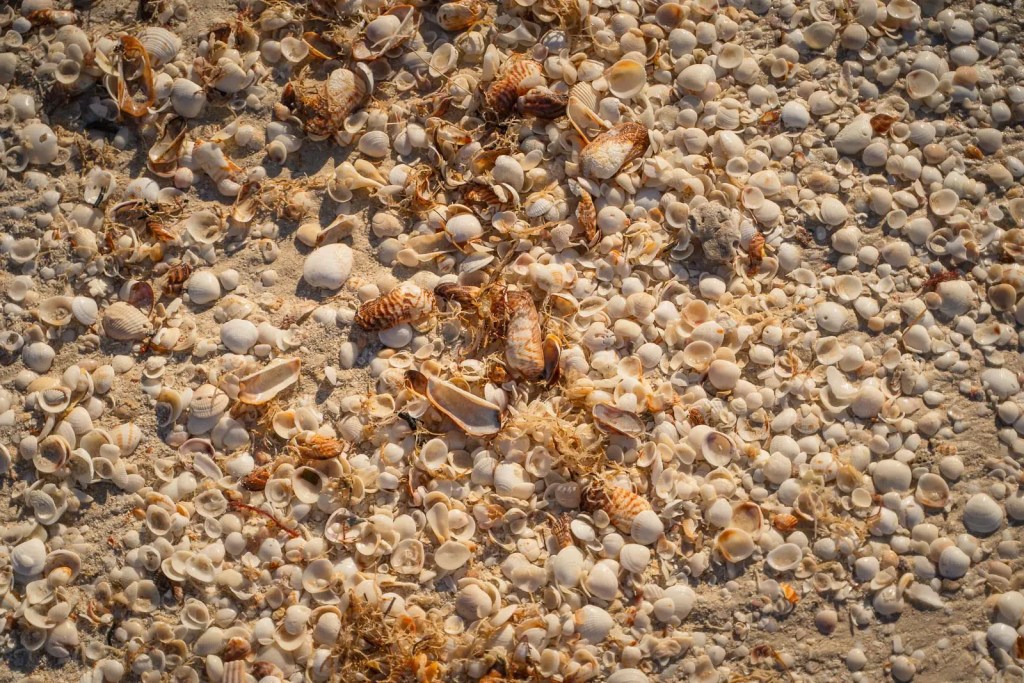
Whether you’re on a tour or exploring independently, Celestun Beach is a great place to chill out, stroll along the shoreline, or hunt for shells.
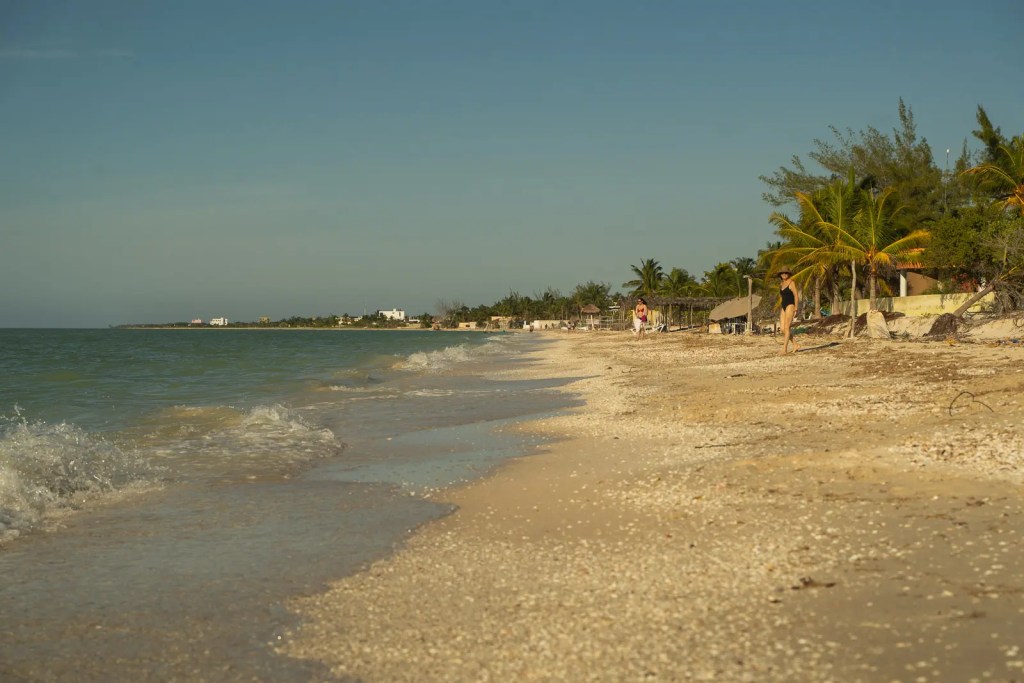
Quieter and more rugged than many of the other beaches in Yucatan, it’s perhaps not ‘Insta-worthy’, but it was very interesting to walk along. Every few meters we found beautiful shells and other washed-ashore treats.
Several small beachfront restaurants serve fresh seafood. It’s a bit more expensive than Merida, but it was included in my tour which was ideal! I can’t remember what it was, but the catch of the day was amazing! Bring your own snacks if you don’t want to pay for food.

4. Birdwatching Beyond Flamingos
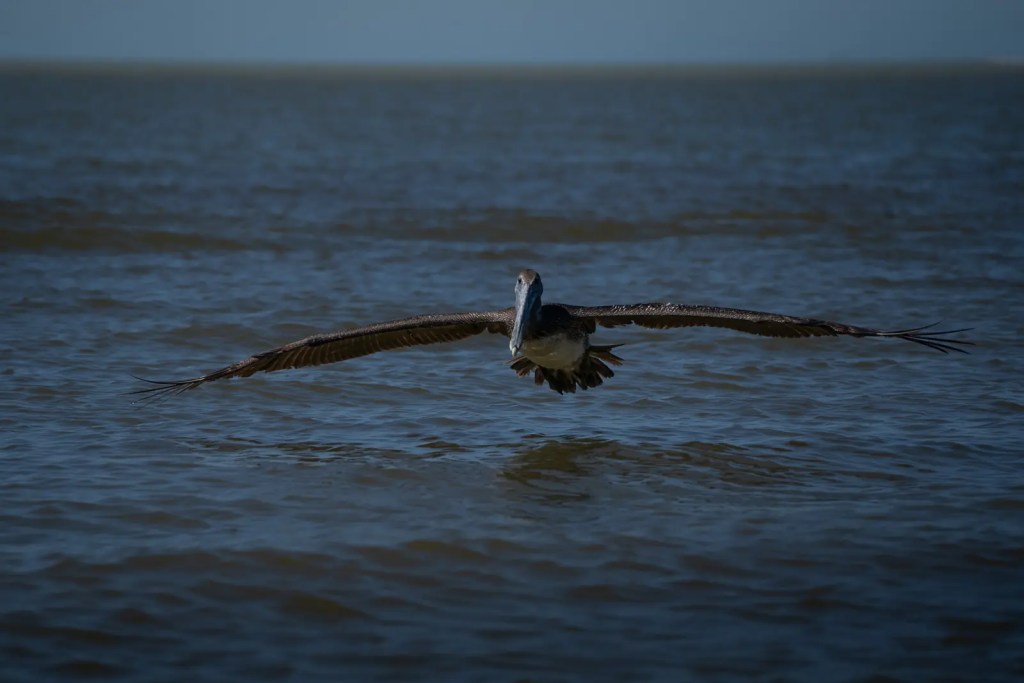
In addition to flamingos, the reserve is home to a wide variety of bird species such as pelicans, cormorants, egrets, ospreys, herons and more. Various duck, gull, and geese species are also found here, though they’re much more interesting than the ones I usually spot in the UK!
Bring some binoculars or a zoom lens to try and identify different species in the reserve.
5. Visit the Ria Celestun Interpretation Centre
This small centre provides information about the local ecosystem and conservation efforts.
Tip: Visiting before your tour can give you a better understanding of the area’s biodiversity.
6. Visit Sisal or Progreso Beaches
Whilst these beaches are not within the Celestun Biosphere, these two areas offer a great alternative for explorers looking to get off the beaten track. You could spend the rest of the day enjoying the peace from these beaches, and potentially spend the night before heading back to Merida.
From Celestun, it’s around 60-90 minute drive to either of these beaches.
Fun fact: Progreso is home to the longest pier in the world, jutting out over an impressive 8km!
Where to stay in Celestun
Accommodation in Celestun town is pretty limited! There’s nothing on Hostelworld (at least as of 2025), so Booking and Airbnb are your best options for booking somewhere in advance.
The cheapest options are basic and small boutique hotels located just along the coast. These range from £50 upwards, so more expensive than in Merida.
Of course, there are more luxury options in the form of eco-lodges and fancy beach-side Airbnbs which can be anywhere over £100/night.
Whilst it is more expensive, staying overnight lets you experience Celestun without day-trippers and catch early morning wildlife activity. It’s up to you if it’s worth it.
What to Pack for Celestun Biosphere Reserve
If you’re taking a day trip to Celestun Biosphere, make sure you bring:
- Lightweight clothing + swimming costume: I wore a T-shirt and swimming shorts for the day which was perfect given the weather.
- Hat and sunglasses: On sunny days it can get very bright on the boat. Just be careful not to lose your hat!
- Sunscreen: Ideally bring something eco-friendly since there’s the option to enter the water.
- Insect repellent: Mosquitos are common in Mexico, and you’ll find a few insects in the mangroves.
- Binoculars: Great for wildlife spotting, this will take the experience to another level!
- Camera: Preferably one with a zoom lens!
- Dry bag: Keep your belongings safe and dry whilst you’re on the boat.
- Towel: Even if you don’t go in the water, a towel is helpful so you can lie down on Celestun beach.
- Water and snacks: It’s a fair journey from Merida to Celestun and snacks are more expensive at the beach, so it’s worthwhile coming prepared. If you don’t have these, don’t stress though as you can buy there!
If you’re not planning on hiking anywhere, flip-flops or sandals are fine for the day. I wore trainers but soon realised I didn’t need them!
Sustainable Travel Tips
Since Celestun is a protected area, it’s important to be mindful of the environment:
- Keep a respectful distance from wildlife: Don’t make loud noises near the animals or get too close.
- Choose eco-conscious tour operators: Once again, Get Your Guide can be trusted.
- Avoid single-use plastics and dispose of waste properly: Do not let go of any rubbish on the boat, otherwise it will blow away and damage the mangroves!
- Support local businesses: Dine and shop locally if you want. The Marquesita stand at the beach was fantastic!
Before you go
Thank you for reading this guide to visiting the Celestun Biosphere Reserve in Mexico. If guides, and travel content like this interest you, head over to my Homepage to find out more.
If you are new to Matt’s Next Steps, check out my About page to find out a bit more about who I am, my travel adventures and why I wanted to become a travel writer.
Please comment below and let me know your thoughts and experiences, or if there is anything else you want information on.
Happy travelling!